When you've started looking at flights4 min read

You want to stand where they stood.

Do this before you book the flight.

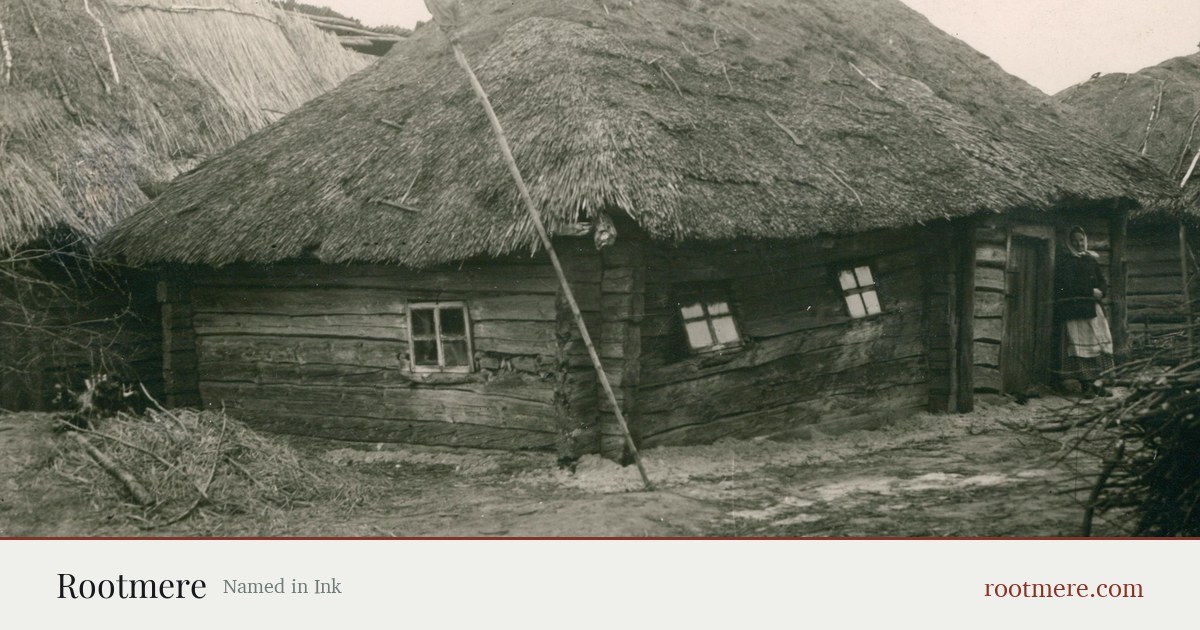
A thatched village house and a woman at its door, interwar postcard from Polesie — Rootmere
A thatched village house and a woman at its door, interwar postcard from Polesie

It's a good reason to cross an ocean. You want to walk down the road they walked, see the church where they were baptised, maybe put your hand on a wall that was already old when they left. The disappointment we'd most like to save you from is a simple one: going all that way to the place the family remembered, when nobody had checked it was the right one.

The expensive mistake

Make sure it's the right village first

Family memory is often good on feelings and shaky on geography. "Near Kraków" can mean a village a long day's ride from Kraków, because Kraków was the only name anyone in America would recognise. And names repeat. Poland alone has a long list of places called Nowa Wieś, which just means New Village, so a name on a passenger list may fit dozens of spots on the map.

It's worth getting one document that names the place and a second one that agrees with it. Then look up which parish served that village at the time your family lived there, because several small villages often shared one church, and the boundaries moved. The church your people knew might be two villages over from the one on your plane ticket. We wrote about how the village usually gets found in this piece.

What makes the trip personal

A house number turns a village into a place

A village you've found is lovely. A house you've found is something else. In former Austrian Galicia, parish books usually give the house number on a birth, marriage or death, and old cadastral maps can show you where the numbered houses and fields sat. Gesher Galicia has a searchable map collection, and Poland's Szukaj w Archiwach site is another place to look.

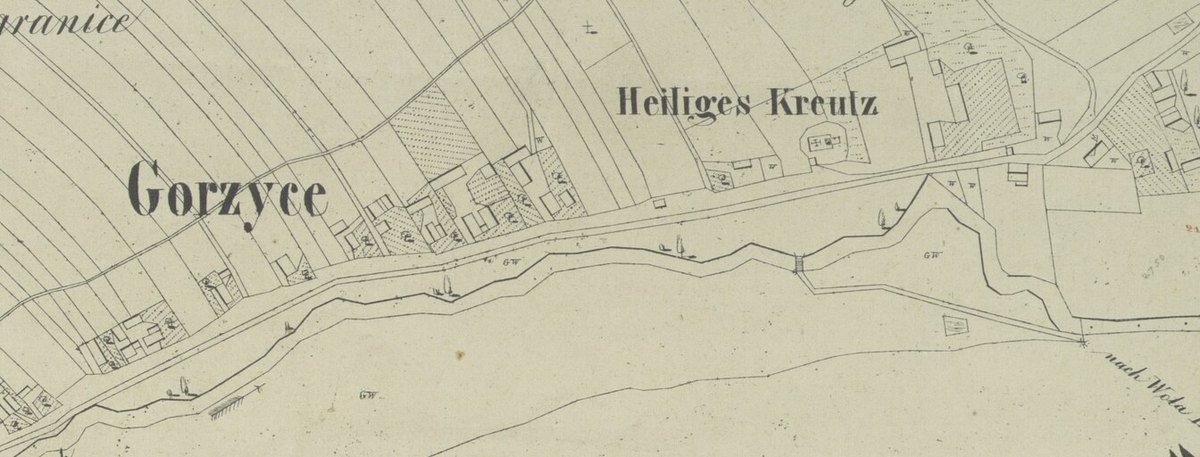
Gorzyce, Przeworsk district, on the Austrian cadastral map of 1852: houses strung along the road, each building plot numbered.
Gorzyce, near Przeworsk, on the Austrian cadastral map of 1852. Every building plot along the road carries its own small number, and the cadastre's register books tie those numbers to house numbers and owners. That is how a house number in a parish entry can lead you to one plot of ground. Source: State Archive in Rzeszów, via Wikimedia Commons (CC0).

A warning, though. Those numbers often went up in the order houses were built, so number 12 and number 13 might be nowhere near each other. Some villages were renumbered later too, and the building itself may be long gone. So you may end up standing in a field. That might still be enough for you, as long as you know it's the right field.

Once you're there

Three things that surprise people

The graves may not be there. Americans tend to think a grave is forever. In Poland a burial plot generally comes up for reuse after 20 years unless someone pays to keep it, so a great-great-grandfather's stone is often long gone. Don't plan the trip around a headstone. It's still worth walking through the cemetery, because you may see your surname on newer graves, and that can mean relatives.

The books may not be at the church. Older parish books have often moved to a diocesan or state archive, and a priest can't show you what he doesn't have. Write ahead, in Polish if you can, and ask politely. Some diocesan archives keep very short hours, some reading rooms want a booking, and camera rules differ, so check each one before you set your dates. Recent records are closed too. In Poland, civil births generally stay restricted for 100 years, and marriages and deaths for 80, unless you're close family.

The people may remember more than the paper. In a small place, somebody's grandmother may know exactly which family you mean. Bring photos, write the names down the way they were spelled over there, and get someone to help with the language. We can't promise you a long-lost cousin at the door. It does happen sometimes, and you're much more likely to get there if you can name the family and the house. Here's why somebody probably stayed behind.

What we can and cannot give you

We can't promise the house still stands or that anyone there remembers. What we can do is read the records, tell you which village and parish they point to and how sure we are, and find a house number if the books give one, so that you know where you're going before you pay for the ticket.
Thinking about going? Tell us what you've got.

Send us the name as the family says it, roughly when they came over, and the village if you think you know it. We'll tell you whether it looks right, which parish it probably belonged to and whether those books survived. That first answer costs nothing.

Write to us

The first answer is free. If the books look promising, the next step is archival scouting: $190, 5–7 days, credited against the project. How it works