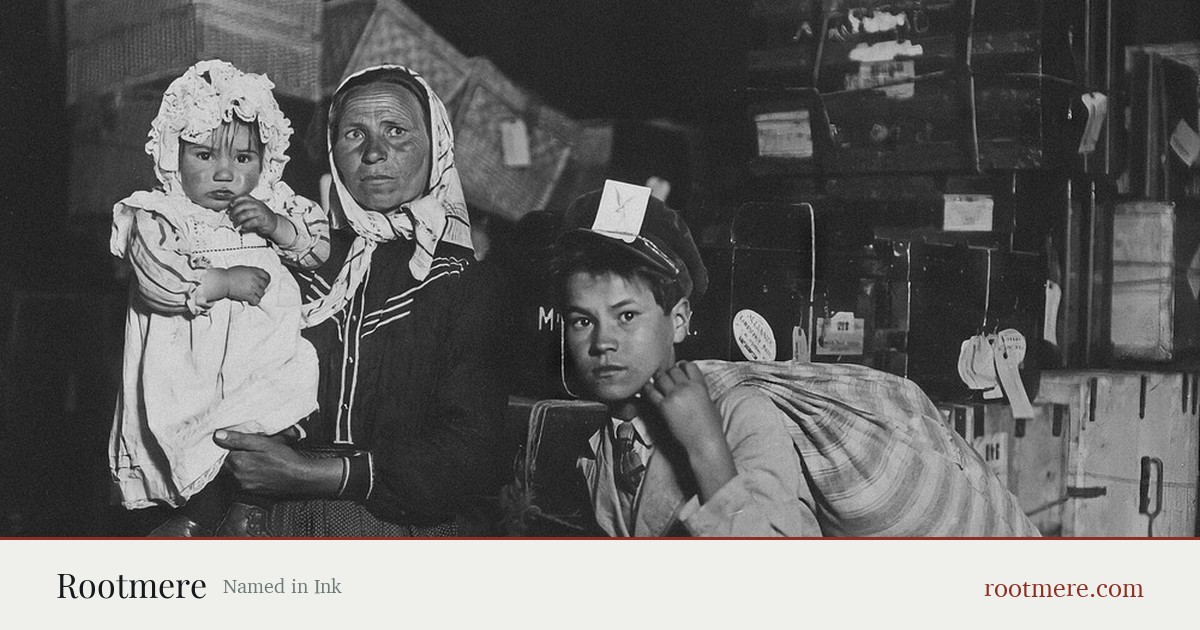
A mother and three children in the baggage room at Ellis Island, 1905, photographed by Lewis Hine
Most families have one. A great-uncle who went to America and "was never heard from again." A first wife nobody mentions. A baby born before the wedding. A brother who married the wrong person, or into the wrong church, and stopped being family over it. The family story just closes around the gap. But the parish priest who wrote the baptism didn't know he was supposed to forget.
It's rarely a big dramatic secret. It's a photo with one more person in it than anyone can explain. Or your grandmother saying "oh, him" and changing the subject. Or a count that doesn't work: the story says six children, the dates leave room for seven.
A lot of people stop there. It feels like poking at something the family decided, and maybe that's not your call. We get that. But the decision was made by people who are mostly gone now, about a quarrel that's mostly gone too. What's left is a hole in your own tree, and a question your kids may ask one day.
Why families cut someone out
The reason is often smaller than the silence around it
Some cuts were about shame. A child born outside marriage, a divorce, a stay in an asylum. Some were about money, usually land: one brother got the farm, the other got nothing and left angry. Some were about faith or politics. And some people simply emigrated, wrote twice, and stopped writing. After twenty years that turns into "we don't talk about him," even if nobody remembers why.
Here's one that surprises people. In Galicia, Jewish couples who married in a religious ceremony but never registered the marriage with the state had their children written down as illegitimate. That was very common, and it had nothing to do with anyone's morals. A great-grandchild who finds that word in the book can read it as a scandal. Usually it was just paperwork.
So before you decide the story is too dark to look at, it's worth knowing the record might be a lot more ordinary than the family's version of it.
What the paper kept
The books don't know who fell out with whom
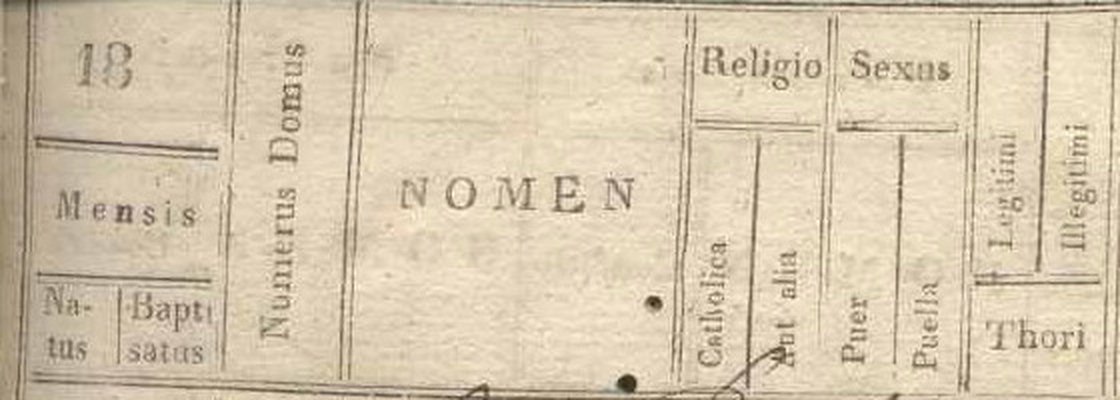
A parish register was kept in order, entry after entry, year after year, for everyone born in the parish. In many Galician Catholic baptism books there's even a column for it, headed in Latin, where the priest ticked legitimi or illegitimi. The child is there either way, with a mother's name and often a godparent who turns out to be a cousin.
The printed headings of a Galician baptism book, 1840. On the right, under Thori, the priest had two boxes: legitimi and illegitimi. Either way the child went into the same book, in the same order as everyone else. Source: Wikimedia Commons, public domain.
The brother who left for America shows up on the other side, too. Ship lists named the relative or friend a passenger was going to, and later naturalization papers usually name the town he was born in. If he married there, had children, died there, that's a whole branch of your family living in records nobody in your house ever looked at.
The first wife is in the marriage register and the death register, a few years apart. The disowned sister is in another parish's marriage book, because she married out. None of these entries say "do not mention." They just say who, where and when.
Being straight with you
Sometimes the reason really was hard
Not every erased branch turns out to be a misunderstanding. Sometimes it's violence, or a loss the family couldn't survive talking about. What you do with that, and what you tell your children, is completely up to you. But knowing beats guessing. A gap invites the worst story, and most of the time the real one is gentler.
If there's a name nobody says
Start with that name, even if it's all you've got
Tell us who it is, or who you think is missing, roughly when, and anything you know about where the family lived. We'll tell you which books are most likely to have him or her and what we'd check first. That first answer costs nothing. Who's the one in your family nobody talks about?